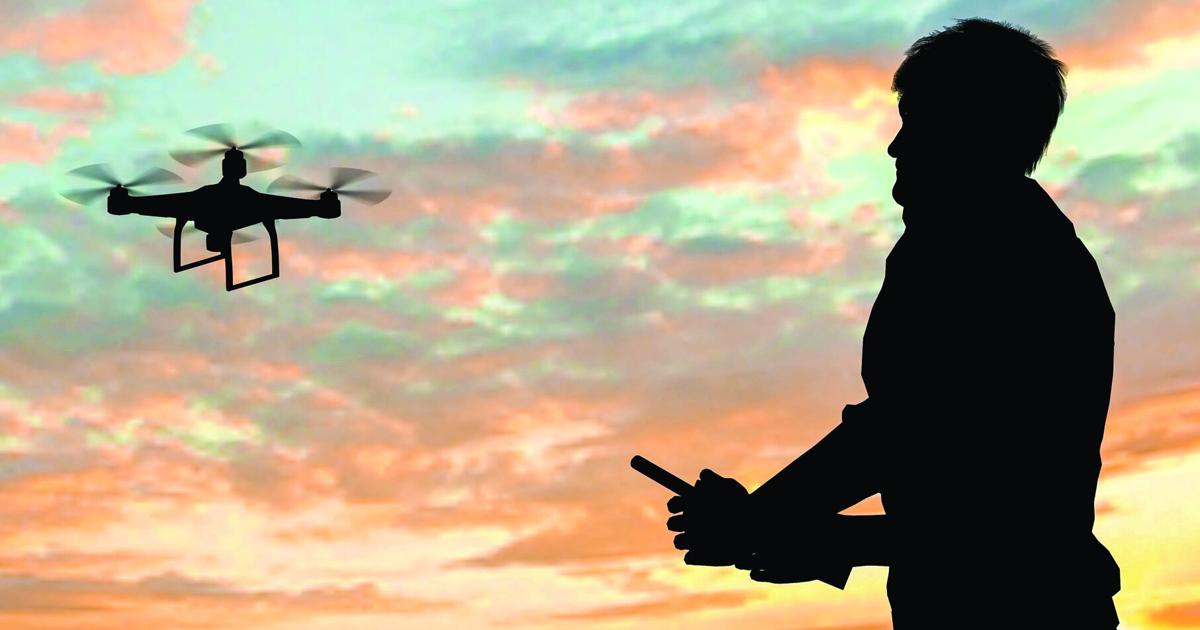
NEWPORT CITY- The Vermont Electric Cooperative (VEC) continues to seek new technologies to maintain an electric power grid to provide reliable power and improve grid resilience. Recently VEC has contracted with organizations that use drones for a variety of purposes, including for inspecting power lines, transmission stations, and distribution poles.
At a recent webinar titled Flying For The Future, VEC Chief Operating Officer Peter Rossi said they have replaced helicopters doing aerial patrols with drones. Every year VEC inspects 20 percent of the grid. That translates to 540 miles of distribution lines, comprising 11,527 distribution poles and 2,300 transmission poles.
Helicopters can travers in areas where there is no road network or there’s rough terrain. Conversely, they fly 200+ feet above ground making it difficult to visually pinpoint potential problems.
“We can use drones and hire ex-line workers who know what to look for,” Rossi said. They launched the first drone inspection program in 2024, which took two weeks to complete. In contrast, prior to 2024 they hired a company to inspect the lines, pole by pole, which took two to three months.
With the drones, VEC is able to collect data on wire size and transformers, which are entered into a database. Rossi said in the future VEC will incorporate thermal imaging to view inner connections that even a drone can’t see. As a bonus, the drones can pinpoint where there may be a vegetation issue that could interfere with the operation of the grid.
The results are reduced outages, better data collection, and a better match of categories of priority repairs. In other words, a red match means the problem ranks as the highest priority that calls for immediate action. An orange or yellow match is recorded and dealt with at a later date.
The drones are especially useful in stormy weather when roads are blocked by snow or fallen trees. The drone pilot can assess what material is necessary to fix the problem and send a crew to the site.
Weather does affect drones, including the transmission signal. Wind and cold weather can reduce a drone’s effectiveness. The drones VEC uses are two feet by two feet in size.
One impetus for Rossi to explore new technology is a result of two fatalities that occurred a few years ago. The incident took place while on air patrol, leading Rossi to ground all helicopter flights.
Another technology VEC may consider using in conjunction with drones is the use of LIDAR. This technology uses lasers to digitally image sections of the grid in 3-D, and it can be used at night. Rossi would like to create a 3-D model of the entire grid.
“We can look at the most at-risk part of the system and get more information,” Rossi said.
Shawn Juoire is a VEC Operations Supervisor who spent years as a lineman. He said the drones will be able to broadcast video from a drone and stream it back to the company command center.
A question-and-answer session followed the presentation. Rossi said the future costs of expanding the drone program will depend on the options negotiated with drone companies. LIDAR and streaming video are two options VEC might consider adding next year.
Drones flying overhead can constitute a privacy concern. Rossi said the drone only focuses on lines and poles; they don’t scout out houses and cars. He’s also aware some people have skittish animals.
“We alert landowners when we do a flyover,” Rossi said. VEC does send notices to those who are on a contact list.
What does Juoire like about drone technology?
“I learned about their versatility,” Juoire said. “Now we see the information they can bring back; we can learn from it.”
At this point VEC contracts for the drone technology. Rossi is investigating working with a person with military experience who has a good knowledge of drones. There may be occasions when a drone is needed for a specific problem that can be swiftly responded to.
“I would like a drone on a daily basis,” Rossi said. “We can proactively get reports of potential damage.”
VEC linemen still must visibly inspect poles, but over time with greater automation, their role can be reduced somewhat.