
A Ketchikan-based doctor volunteering to provide medical care overseas has played a crucial role in developing a program to make ultrasound technology more accessible to underserved communities through his work at Lumbini Medical College in Tansen, Nepal.
Dr. Peter Rice, who previously served as the medical director at PeaceHealth Ketchikan Medical Center and remains a care provider there, has volunteered in Nepal and Cambodia for three successive years through Health Volunteers Overseas. He spends two months out of the year abroad, spending one month in each country where he teaches medicine.
Rice was recognized with a Golden Apple Award from HVO, which recognizes “supporters who make extraordinary contributions to the sustainability and effectiveness of (HVO), earlier this year. His next trip to Nepal is scheduled for later this year.
“I think (it’s) a good model in many places, because sometimes it’s kind of tough to feel like you’ve done a really helpful thing if you just plop in to a remote, underserved community in a low-resource setting and then, you know, make some diagnoses, pass out pills, … and then you leave. And then there’s no continuity, there’s no person to … give refills and continue monitoring the patient, so this is kind of a nice model because what I do instead is go to low-resource medical schools and teaching hospitals and then teach medical students and residents,” he said to the Daily News.
“The professors at these low-resource medical schools and hospitals — teaching hospitals — they’re they’re really overworked and underpaid. And so they really appreciate the fact that if I go over and give 12 lectures on a certain topic, then it’s just 12 lectures they don’t have to give,” he added. “And then they also like to see if, you know, as a doctor from the United States, if I have any any ideas to share about how they’re caring for their patients, ‘cause when we’re not lecturing, we’re going on rounds in the hospital or or working in clinic alongside (the local medical providers) just to kind of give advice.”
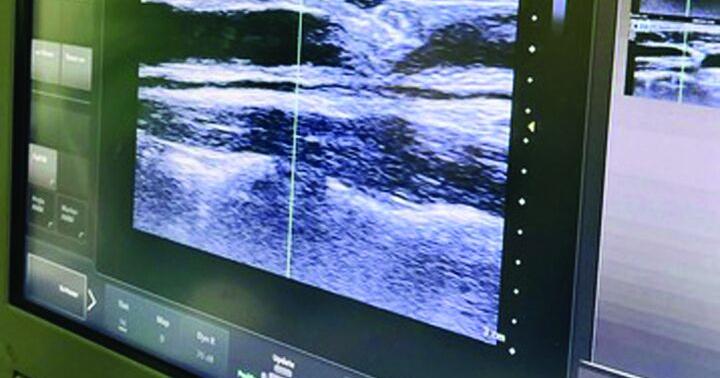
Rice has been instrumental in making point-of-care ultrasound — or POCUS — training to Nepal. As opposed to traditional ultrasound machines, point-of-care ultrasound technology is handheld. He said each machine is approximately the size of four iPhones.
In addition to its small size, the lower threshold for a doctor to be able to use bedside ultrasound machines means they are more accessible to underserved communities than traditional ultrasounds.
“(The technology has) just come on strong in the last 10 or 15 years with the development of smaller ultrasound machines and handheld ultrasound tools,” he said. “So the distinction between a regular ultrasound is that that would be done at the hospital, with a pretty big, fancy machine by someone who’s done two years of ultrasound training (as) a technician. And bedside, or point-of-care ultrasound, is done by a regular doctor — not an ultrasound technician — using either a pretty simple bedside machine that rolls around on a little cart or, probably more commonly, a handheld machine or device.”
In the summer of 2023, Rice had been learning how to use POCUS himself and had enrolled in a five-day ultrasound training course offered through Weill Cornell Medicine by head instructor Dr. Tanping Wong. After he returned from his season of volunteer work in Nepal, he reached back out to Wong to propose a joint effort bringing POCUS training to Lumbini Medical College.
Rice had realized the need for more intensive bedside ultrasound training after watching medical professionals there learning how to use it with inadequate resources.
“I observed that the residents were trying to teach themselves bedside ultrasound using this ancient machine. It was 15 years old, … (with a) fuzzy screen, but they (were) just, like, trying really hard,” he said. “And so I, an idea popped into my head that I could probably help this situation.”
Rice purchased two handheld ultrasound machines for use in LMC, where another instructor began teaching internal medicine residents how to use them in January 2025. Rice said that ultrasound machines, contrary to their widespread association with prenatal care, have a wide range of applications across several fields of medicine: the technology works by using sound waves to develop images of internal structures inside the body, including abcesses and fluid retention. Ultrasound technology has roots in military engineering, originally developed by Soviet and American scientists to detect submarines.
With the handheld devices, the instructor in Nepal was then able to show pediatricians and surgeons, in addition to internal medicine practitioners, how to use the POCUS machines.
Rice also enrolled the students and doctors in Nepal in an online teaching program offered by the Global Ultrasound Institute. The subscription includes, he said, “all sorts of teaching videos and the ability to provide feedback to the ultrasound images that people would, would obtain.”
“That’s … kind of what (the Institute) exists for, is trying to promulgate this information all over low-resource places all over the world,” he said. “Anyway, so I got a subscription to that.”
“We’ve had an instructor over there every three to four months to do a week of teaching (since the program’s inception in 2025), and it’s just been, really, a great success. The residents have gotten really good at it, … and they use it all the time, so it’s kind of heartwarming to see it succeed,” he said.
He estimates anywhere between 35 and 50 Nepali medical students and professionals have participated in the bedside ultrasound training. One obstacle they face, Rice said, is that it’s difficult to maintain ongoing engagement with people enrolled in the training who are also actively working.
However, he and Wong continue making efforts to keep POCUS training accessible to both new and experienced healthcare workers.
“The residents have been, they’re really busy, and so they haven’t engaged as much with, say, uploading their images at night so that they can be reviewed by the faculty, you know, who are 2,000 miles away. And for the first year, we had a follow-up Zoom call with more teaching … every other Monday night, and that’s not been as well attended as we would like,” he said.
Younger doctors in fellowship roles at Cornell, he said, are “intrigued by this notion of going over and spending a week in Nepal teaching.” He added that a friend of his who works as a hospitalist in Ketchikan one week each month has donated $10,000 to support those fellows’ travel expenses to Nepal.
“This technology,” he told the Daily News, “really allows earlier and better diagnoses of many, many conditions and, you know, much more appropriate treatment that’s guided by the information you get from the handheld, or bedside, ultrasound.”