

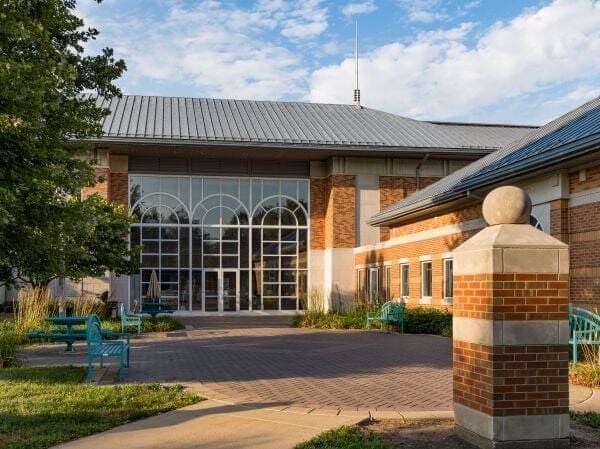
New home construction on Meadows Drive in Sage Meadows in Monticello.
Drop in a question of your very own BY CLICKING HERE or by emailing Kathy Reiser at mailbag@news-gazette.com.
Must be Transportation Week here at The Mailbag, with answers to readers’ questions on several area roadways, changes to MTD bus routes, and an unusual train on a Champaign siding. Also, a fast-growing subdivision in Monticello, a restaurant update, and how Illinois Public Media’s radio stations are paying the bills now that federal funding has been discontinued.

“I see crews digging up, refilling and paving small segments of Route 45 South with asphalt. They don’t seem to be fixing the roughest parts of the road — and the hopscotching around seems kind of random. What’s the strategy here?”
Illinois Department of Transportation Engineer Kensil Garnett told me “there is a method to the madness” for the construction operations taking place on Neil Street in Champaign and Dunlap Avenue in Savoy.
The crews are completing “Class D” patching on the project. The patches are the width of one or both lanes, and more than 100 feet long in some cases. At least 50 areas are to be patched, and they are anywhere from 6 to 160 feet long. “The areas being patched have distresses deeper than what is being milled,” Garnett said.
So … why use asphalt rather than concrete for these huge expanses of patching? “The asphalt patches will be as durable as a concrete patch — we do have density requirements for this work — and the depths of them are either 12 inches or 15 inches, depending on the location. The asphalt patches can be completed quicker than if we were placing concrete.”
Garnett said the patching will allow the finished roadway to remain in good condition for a longer period than it would if the new surface were applied without the patching. Once the patching and milling are completed, both the north- and southbound lanes will be overlaid with asphalt.
“We are milling 2.75 inches of asphalt off the existing pavement and placing back 2.75 inches of asphalt with two hot-mix asphalt mixture (hma) types. There will be 1.25 inches of a binder course and 1.50 inches of a surface course. Placing the same amount of asphalt back that is being removed alleviates having to adjust frames and grates and filling in the existing combination concrete curb and gutter.”
“With federal cuts to NPR, how will WILL-AM 580, WILL-FM 90.9 and Illinois Soul 101.1 FM be funded going forward? What percentage of each station’s budget came from listener contributions, how much from state and federal government sources, etc.?”

Illinois Public Media Executive Director Moss Bresnahan said the UI’s Illinois Public Media (IPM) radio stations and WILL-TV have always been primarily funded by the community. “For many years, more than 60 percent of our funding has come from Friends of WILL and local businesses, about 20 percent from federal funding via the Corporation for Public Broadcasting (CPB), 10 percent from various sponsorships and grants, and close to 10 percent from the University of Illinois.”
When the Trump Administration and Congress eliminated CPB last month, IPM lost $1.5 million in support for this fiscal year and another $1.5 million that had already been allocated for next fiscal year.
The majority of CPB funding for local operations, more than $1 million annually, was allocated to WILL-TV. Bresnahan said public television stations traditionally received more federal funding because they’re more expensive to operate; have larger audiences; and produce and provide early childhood educational programming, which has been a priority.
“On the radio side of things, a higher percentage of CPB funds were used to support WILL-AM 580 since producing local news is expensive. Even so, the majority of the WILL-AM budget comes from community support. Classical WILL-FM receives a grant from the Illinois Arts Council and has very loyal classical donors who support the station. Illinois Soul, our newest station, is currently funded by corporate underwriting with a growing donor base.”
Federal funds also were used to offset shared costs at all four IPM stations, such as tower maintenance, engineering and studio operations, and maintaining equipment for emergency alert broadcasts to the listening/viewing areas.
“Community support has never been more vital than it is right now, making up closer to 80 percent of IPM’s budget this fiscal year. Since the rescission three weeks ago, 425 people have contributed more than $250,000 to the Friends of WILL. We’re truly grateful for the amazing outpouring of support we’ve seen in such a short time. We still face a critical funding shortage of more than $1 million and will be announcing a fundraising campaign very soon.”
In recent months, the stations have been “proactively making contingency plans” for the possible loss of federal funding, Bresnahan said. “While it’s too soon to announce any local or national programming changes, our top priority remains preserving as much local public media content as we can, along with our most popular PBS and NPR programs.
“We’re going through a process now of determining where to reduce costs. If your readers have thoughts or suggestions regarding what parts of IPM’s work they value the most, they can visit https://will.illinois.edu/feedback to share ideas with us.”

“Has there been a resolution to the issue surrounding C-UMTD service to the Salvation Army’s Red Shield Center on North Market Street?”
Well, sort of. With the new bus schedule that took effect Aug. 10, the northbound Yellow bus from Savoy, the UI campus and downtown Champaign now stops at the Red Shield Center only twice each weekday during business hours. More on that in a few paragraphs.
For readers who may have missed the story several months ago, the owner of Champaign’s Market Place Mall (Brookfield Properties) demanded that the C-U Mass Transit District pay $1,500 per month to compensate for wear and tear associated with MTD buses using the privately owned roads within the property for fixed-route bus service. The MTD’s Board of Trustees thought such an agreement would set a bad precedent.
Rather than pay Brookfield for use of the mall property, MTD opted to reroute its buses in the areas surrounding the mall. That resulted in new service to some areas as of Aug. 10, but a significant loss of service to the Salvation Army’s Red Shield Center because buses can no longer use mall property to turn around.
“We reconfigured the 1 Yellow route to divert and serve Salvation Army several times throughout the weekday,” said MTD Managing Director Karl Gnadt. “While we managed to get some service to Salvation Army, the forced route restructuring did provide an opportunity to provide additional, enhanced service to the Champaign Walmart, the Urbana Meijer and the Champaign-Urbana Public Health District. Additional service also will be provided to the Ashland Park in Champaign and Southridge and Myra Ridge in Urbana.”
Captain Kenyon Sivels of the Salvation Army of Champaign County said his organization’s mission “is to serve those in Champaign County who need it most, when they need it most. In recent months, as many as 500 people visit us each day, seeking hope and critical social services as they navigate some of life’s biggest challenges. Those services include our food pantry, veterans’ services, emergency material assistance, and the Pathway to Hope program, which provides families with stability and helps end generational poverty by breaking the cycle of crises.”
Sivels said clients are already feeling the effects of the change to the bus route and schedule. Until August 9, the C-U MTD operated two bus lines that regularly stopped in front of The Salvation Army about every half-hour or so. “These were crucial in helping our most vulnerable neighbors access food and other essential social services.
“Those (bus) lines have now been changed to where only one line stops twice within business hours and (at) other times of the day forces guests to walk a quarter-mile for service. While moving a stop by a quarter-mile may not sound like a lot, imagine being an elderly person on a winter day, a veteran using a wheelchair, or a pregnant mother with her other children in tow, hauling food and supplies down the road.”
Under the new MTD schedule that took effect Aug. 10, Sivels said weekday buses drop off northbound passengers in front of the Red Shield Center at 6:45 a.m., 7:50 a.m., 11:30 a.m., 2:30 pm, 5:30 p.m. and 10:30 p.m. He notes that some of those buses serve FedEx in the nearby Apollo Industrial Park, as well.
“The Salvation Army has been advocating on behalf of those we serve for the preservation of the original bus route since its inception. Now that the new stop location and reduced bus schedule is in effect, we are already seeing the impact it is having on those who rely on public transportation to access resources to meet their critical needs.
“We are listening to our clients’ stories and monitoring the impact this change is having on the number of visitors to our food pantries. We will continue to share data and observations with the C-U MTD so that they have the necessary information to provide adequate public transportation services to those they serve.
“We will also continue to encourage those affected by this route change to reach out to MTD to share their concerns directly with their leadership and to have their voice heard, helping to enact the greatest possible desired change.”

New home construction on Meadows Drive in Sage Meadows in Monticello on Wed. July 16, 2025.
“Any way to tell me how fast Sage Meadows is growing in Monticello? It seems like there are new houses going up every day.”
The neighborhood lies just north/northeast of Kirby Medical Center along Interstate 72. City Administrator Terry Summers told us the plat for Sage Meadows was approved in 2017, with 95 buildable lots in all phases of its development.
The number of building permits issued shows its growth has really picked up in the past few years: 2017 – 4 permits; 2018 – 3; 2019 – 9; 2020 – 11; 2021 – 6; 2022 – 9; 2023 – 12; 2024 – 11; so far in 2025 – 5. That’s a total of 70 building permits issued, with 25 buildable lots remaining.
Summers’ explanation for why the subdivision’s growth has been so robust: “Our school district and quality of life amenities provided by the city both contribute to residential growth here in Monticello.”

“I understand the former Long John Silver’s on North Prospect Avenue in Champaign is being remodeled into a Shark’s fish and chicken restaurant. Any word on an opening date?”
On Wednesday, owner Sage Qattoum said they’re “working on getting the parking lot done and the drive-thru installed.” He’s looking forward to an October opening.

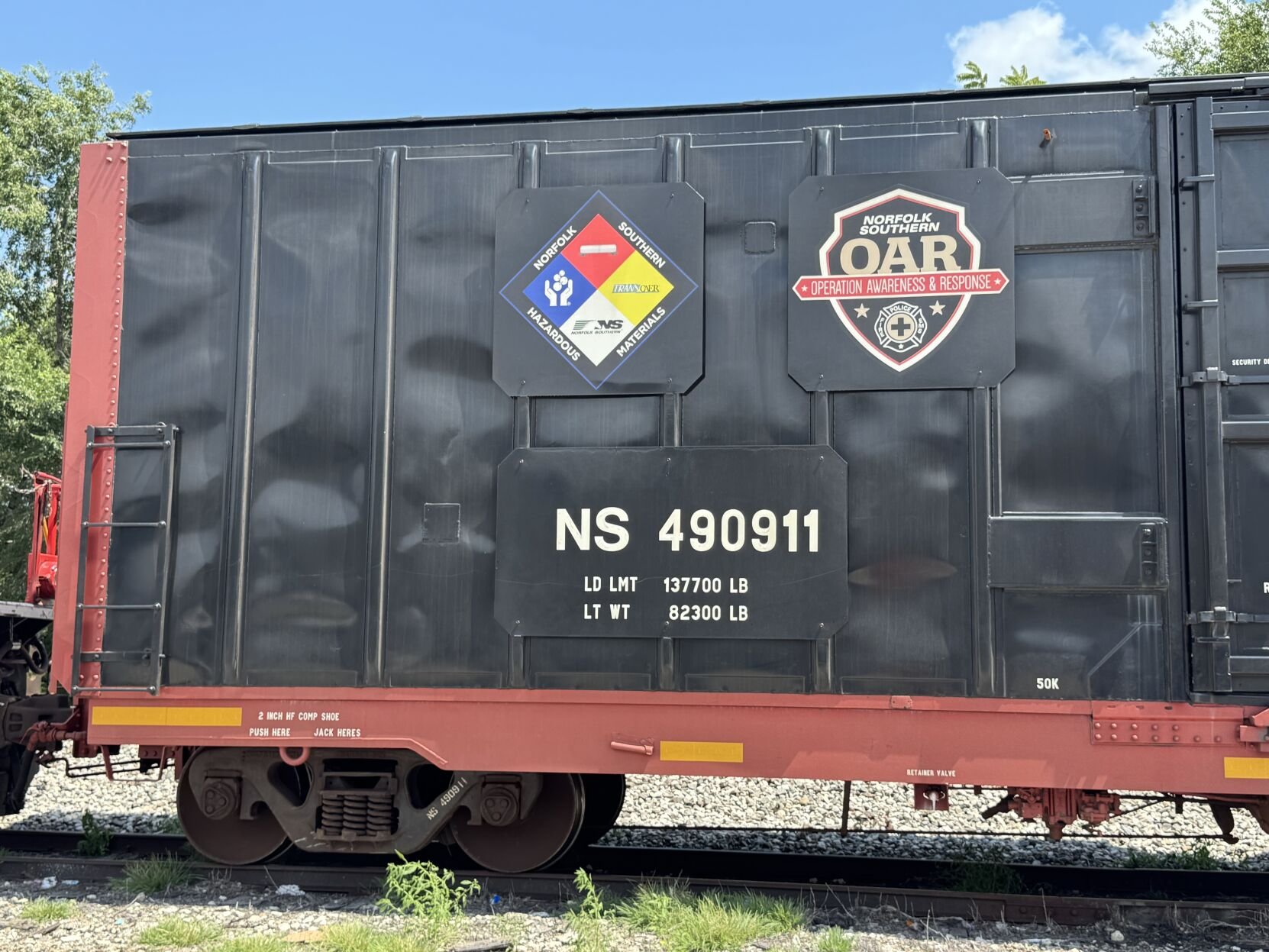
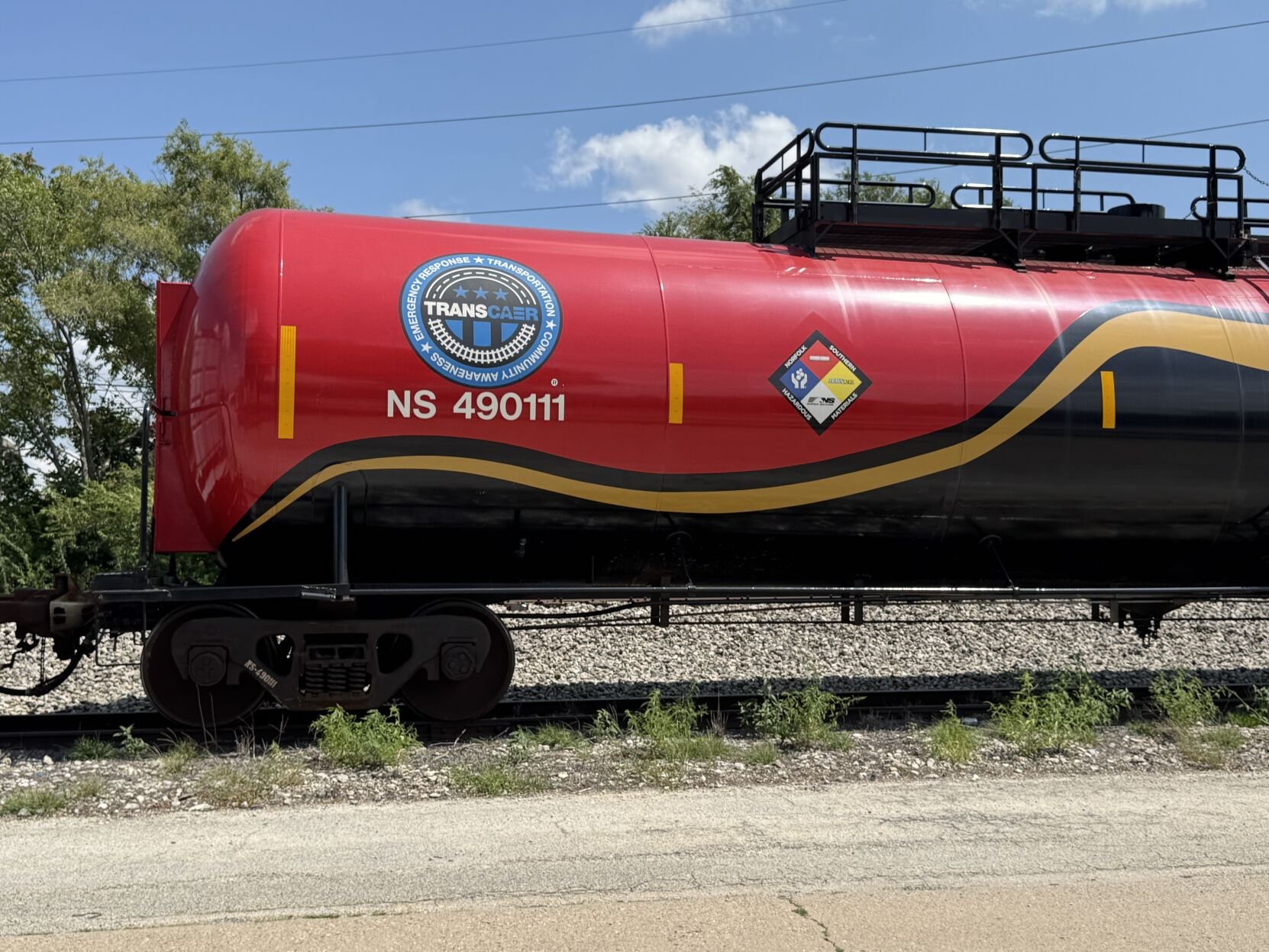
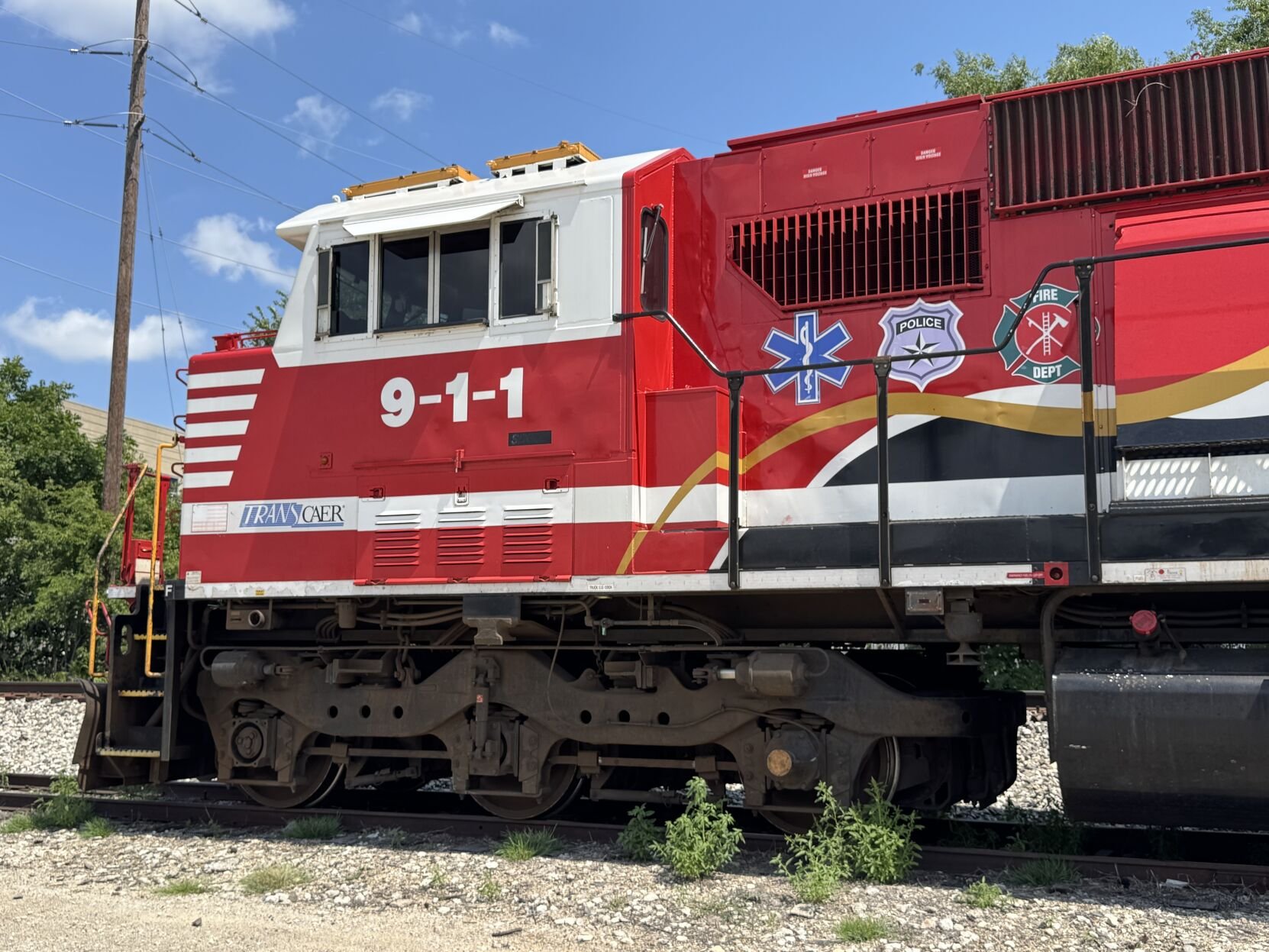
”A special Norfolk Southern first-responder ‘training train’ has been parked in Champaign for a few days now. The engine is cleverly numbered 9-1-1. Has it provided some training for local responders?”
Yes, it has. Since 2015, The Norfolk Southern Safety Train has traveled the 22 states in which NS operates, providing free training and tools to first responders who suddenly may be called on to handle a rail emergency, said spokesperson Chad Previch. This year’s train has been in Champaign training local first responders during the past week.
The train features specially equipped classroom boxcars and several specially equipped tank cars. “Last year, more than 5,500 first responders participated, reinforcing Norfolk Southern’s role in fostering collaboration between railroads and local emergency responders,” Previch said.
Champaign Fire Department spokesperson Randy Smith told me CFD firefighters received classroom instruction, a railcar review and a locomotive tour during the past week. Training topics included railroad safety, railroad shipping documents, tank car identification, valves and fittings, and general locomotive response.
First responders from several area departments took part in the training. Smith said Champaign firefighters planned to wrap up their learning on Friday with a safety drill involving a chemical spill.
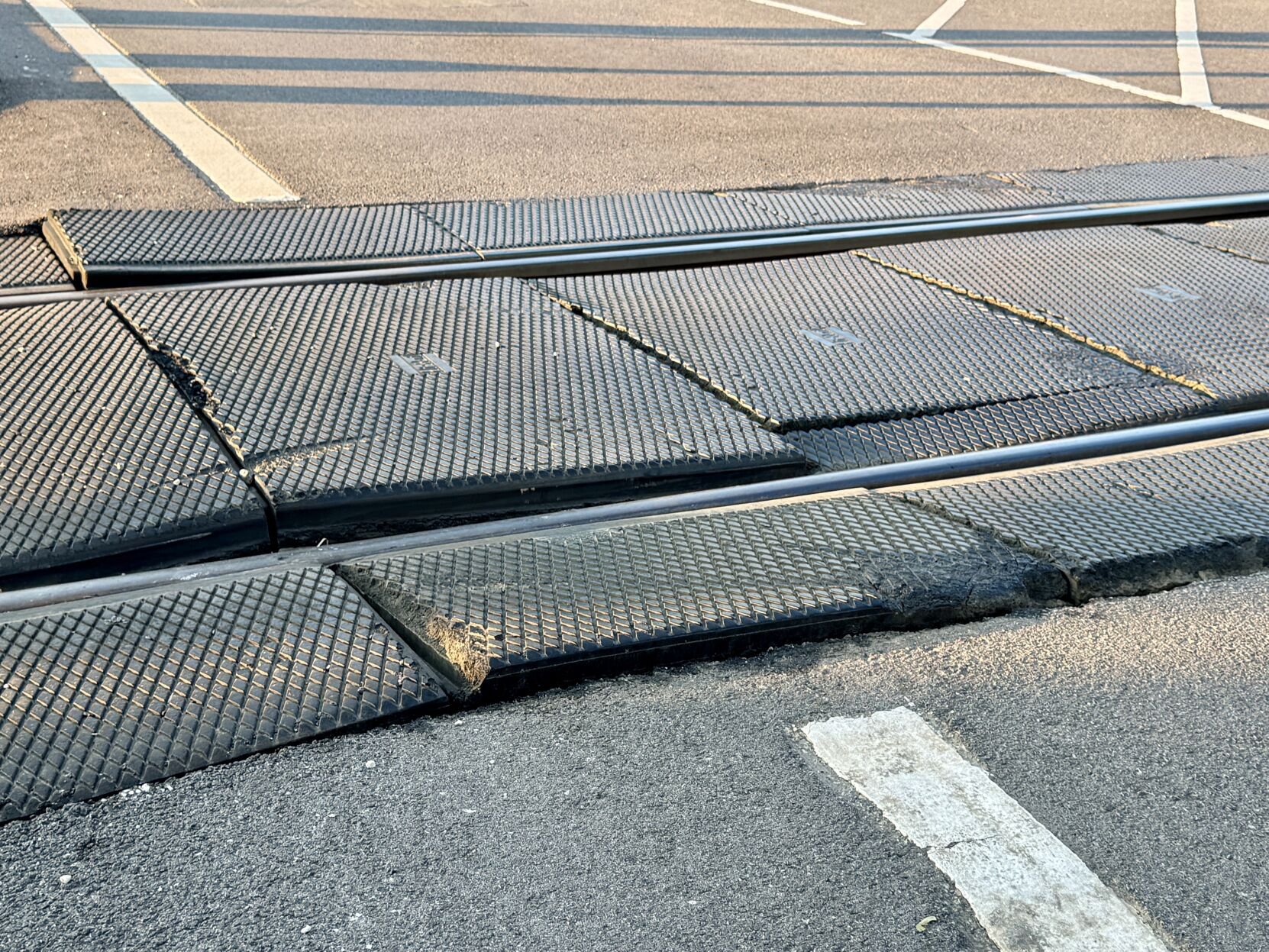
“The railroad crossing at Springfield and Duncan was rebuilt, I believe, right around a year ago. It is already starting to heave on the west side. Any word on a possible repair?”
Spokesperson Michelle Hannan told me all Canadian National rail crossings are regularly inspected — and that CN recently dispatched a crew and made repairs to the crossing at Springfield and Duncan in Champaign. (As of Thursday evening, it looked as if it still needed work).
She said anyone with concerns about CN railroad trackage or other property may contact the CN Public Inquiry Line at 1-888-888-5909.
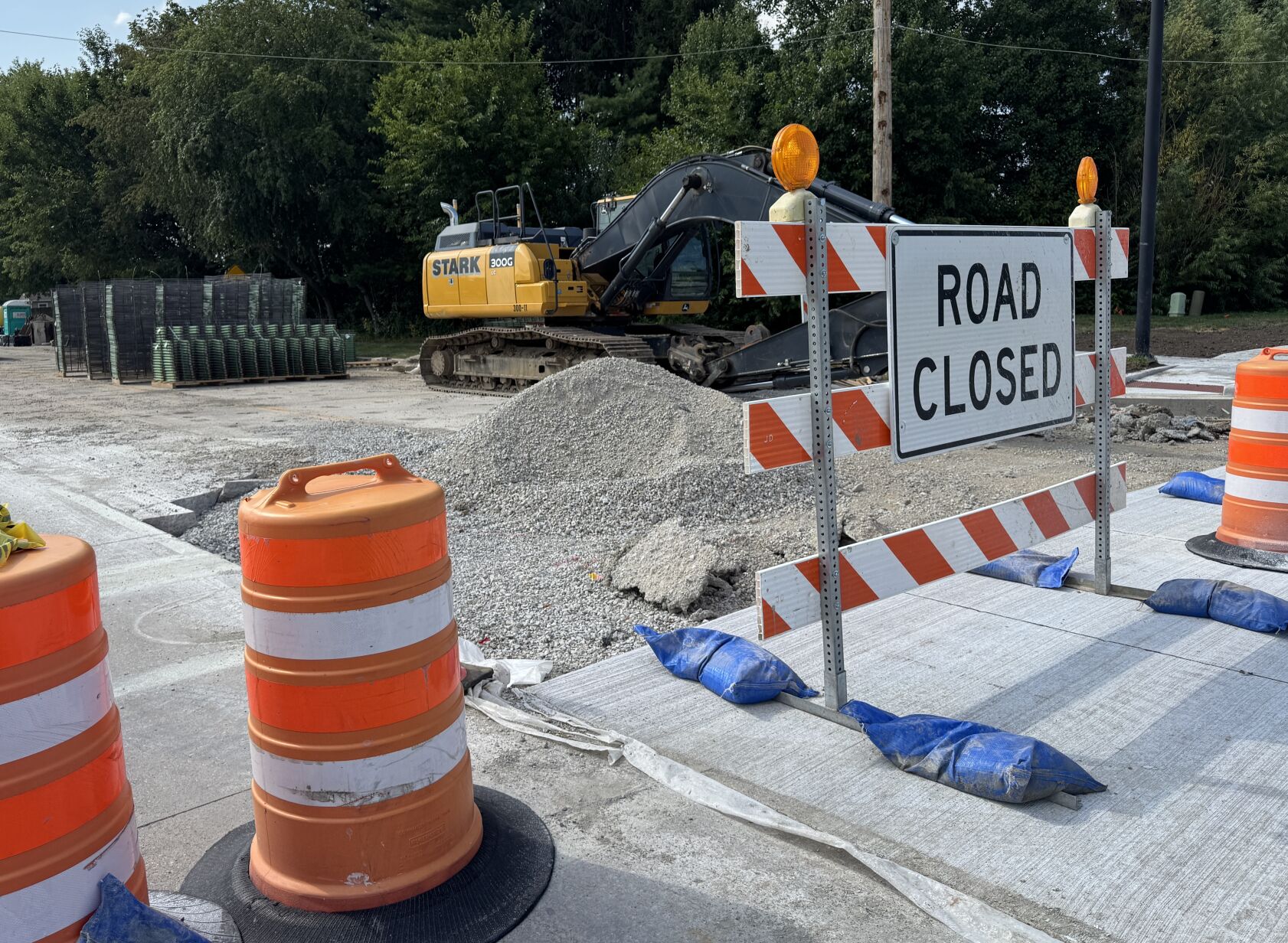
“Why did work stop for almost a week in the Bradley/Duncan intersection area?”
That portion of Bradley Avenue, between Alpine Drive and Duncan Road, is being reconstructed as the final stage of the I-57 bridge/overpass replacement that was done a few years ago, according to Champaign Public Works spokesperson Kris Koester.
In recent days, work was stopped to allow the newly poured concrete to cure before crews moved on to the next phase. The current project began in mid-August and officials expect the street to reopen to traffic by mid-October.
“On Illinois 130 north of Philo, limited lane markings have been present since they were ground off. The current applied layer is extremely rough. What are they doing and when will it be done?”

For our road-geek readers — we know you’re out there — IDOT Engineer Kensil Garnett tells us the project-in-question consists of 6.15 miles of microsurfacing (2 passes), from 0.8 miles south of Washington Street in Urbana to Madison Street in Philo. A.C. Pavement Striping Company is the contractor, and the awarded value of the project was $997,902.99.
The work on this project includes bump removal; fiber-modified asphalt crack and joint sealing; raised reflective pavement marker removal; pavement marking removal; bituminous tack coat; microsurfacing (2 passes); permanent pavement markings; and raised reflective pavement markers.
Garnett said the final pavement markings will be grooved into the pavement. The contract says these grooves shall not be installed within 10 days of the placement of the final course of pavement, to allow the pavement to cure. Curing is the step in which an asphalt mixture’s materials fuse and oxidize. It ensures that the asphalt is hard and strong enough to withstand all kinds of weather, as well as wear and tear.
The 10-day cure period started on Aug. 6. The final pavement markings can be placed once the pavement is cured – so it could happen any day now.

“The section of Springfield Avenue between Coler and McCullough in Urbana has been closed and under construction for what seems like an inordinately long time. When will it reopen?”
City Engineer John Zeman said that construction project has been progressing right on schedule. From the start, city officials expected the work would be finished by early September.
And indeed, I found a City of Urbana notification from April that said the closure was expected to last “until 5 p.m. on Friday, September 5, 2025. Feutz Contractors, Inc will perform pavement and bridge repairs. Access will be maintained to all properties along Springfield Avenue during the project, though no through traffic will be allowed.”
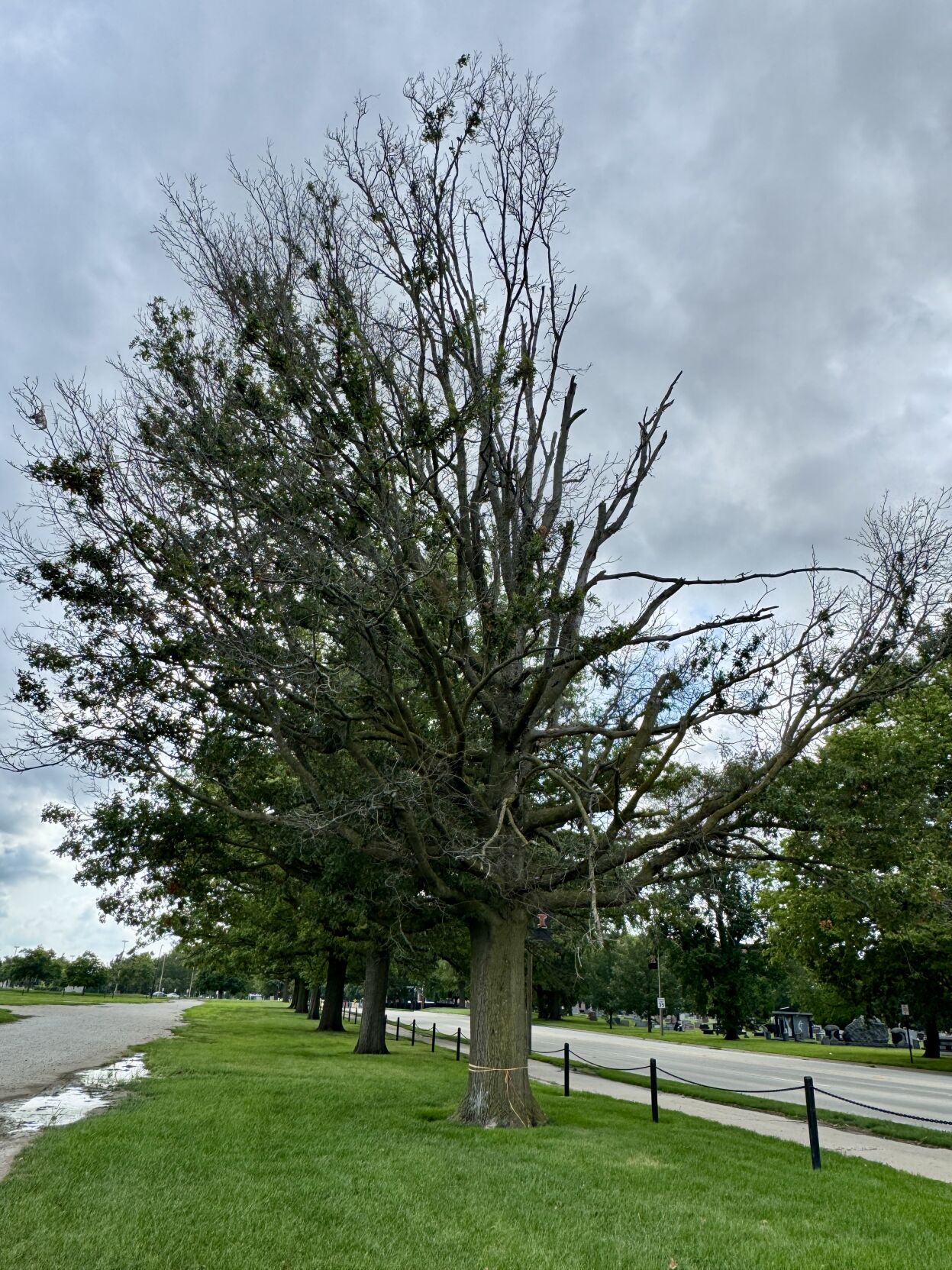
“When I drive on Kirby/Florida from the railroad viaduct to Lincoln Avenue, I see that several oak trees have died, several have lots of dead branches, and others have been cut down. After the Dutch Elm disease disaster of 70 years ago, I thought the university wasn’t going to plant rows of the same type of tree to avoid mass die-offs.”
We answered a similar Mailbag question nearly three years ago, and UI Facilities & Services spokesperson Steve Breitwieser said not much has changed since then.
“The trees along Kirby/Florida Avenue are pin, scarlet and red oaks. Most are in various stages of decline due to factors such as overall tree age, localized soil compaction, high pH soils, and previous years of drought conditions. These trees were planted well before the university transitioned to updated care strategies that now provide significant diversity in planting plans and avoid monocultures, with a preference for Illinois natives.”
He said future tree-replacement activities for that corridor would follow the policies outlined in the Illinois Tree Care Plan. “New trees will be selected that are more tolerant of ground alkalinity levels and that are appropriate for specific locations based on the space needed to support root systems and protect overall health.”
The Campus Landscape Master Plan (CLMP) also provides guidance for revitalizing those areas. Breitwieser says the concepts in the CLMP will be used to inform landscape planning efforts for any renewal work. The entire campus tree inventory may be viewed at https://go.fs.illinois.edu/Trees.

Last week’s Mailbag item on why C-U no longer has any “day-old” bread stores was a fun trip down memory lane — and it brought a response from Lauren Brokish, owner of Central Illinois Bakehouse.
“Just a note that we do sell ‘day-old’ bread at Pekara on Sundays for 50% off each week. It’s all of the unsold loaves from our farmers markets and any over-bakes from the Bakehouse. It’s very popular and we usually sell out early so we tell customers to get there right at open, 8 a.m.” Pekara
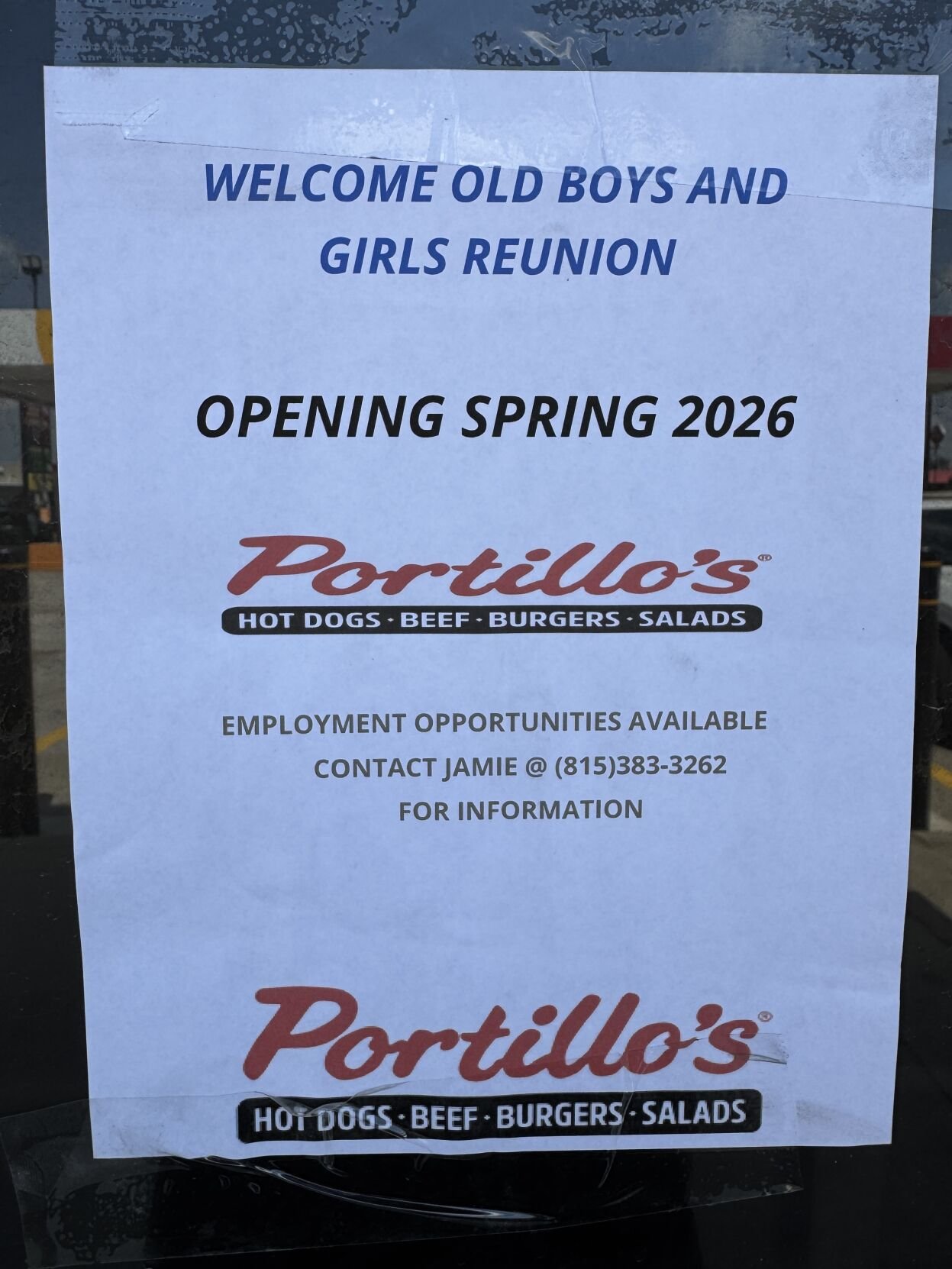
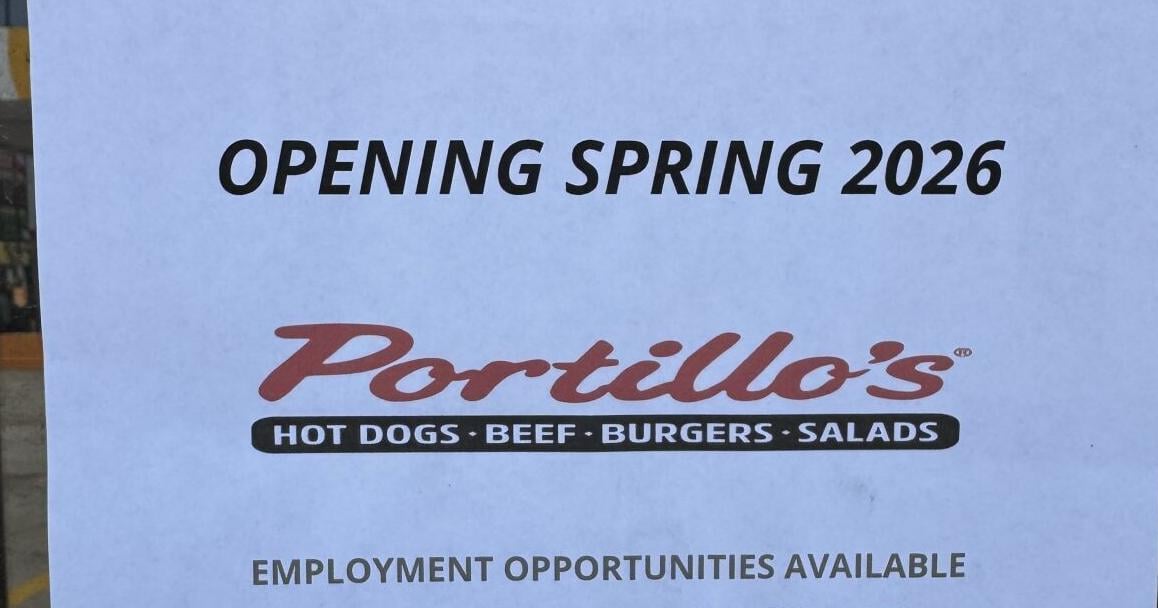
“At the Pilot truck stop in Gilman last weekend, I saw signs that said ‘Opening Spring 2026 — Portillo’s’ on the doors of the former Denny’s restaurant there. Really?”
I’ve asked around, and I still don’t know. A Pilot cashier told me she knew only what she saw on the sign, and that many customers had been asking questions about it. I called Gilman City Hall and the person I spoke with said she did not know anything about the plans for the former Denny’s space, either.
I figured it was probably a prank, but contacted Portillo’s corporate office anyway. I received this cryptic reply from spokesperson Jamie Santarella with the ICR marketing and communications firm: “Thanks for reaching out! We don’t have any details/updates to share here at this time. As soon as anything is confirmed and/or there’s additional info available, we’ll let you know!” Which … may mean something, or may be a big, juicy nothing-burger.
Portillo’s is a chain of restaurants that specializes in Chicago-style hot dogs, burgers and Italian beef sandwiches. QSR, a trade publication of the quick-service restaurant industry, reported in late May that Portillo’s ambitious expansion plans include some new restaurant formats and smaller prototypes. The only Portillo’s in the C-U area is at 2306 N. Prospect Ave. in Champaign.